Staffing and Human Resources
We work directly with talented individuals and successful organizations. Career Strategy Consultants recruits, interviews, staffs, and so much more.
Career strategy consultants
FOLLOW US

Category: Business Partners

How Long Should It Really Take to Hire an Employee?

How Long Should It Really Take to Hire an Employee?

Many employers assume filling an open position should take a few weeks. In reality, hiring timelines often stretch much longer, especially for specialized roles.

Understanding the typical hiring timeline can help companies identify when they may need additional recruiting support.

Average Hiring Timelines

Depending on the industry and role, the average time-to-fill can range from:

  • 30–45 days for general professional roles
  • 45–60 days for specialized technical positions
  • 60+ days for executive or leadership roles

Positions in HR, Engineering, and Operations often take even longer due to limited candidate supply.

Why Hiring Takes So Long

Several factors slow down the hiring process:

Internal Approval Delays

Waiting for approvals or scheduling interviews can add weeks to the process.

Limited Candidate Pipelines

Companies often rely on job boards alone, which limits exposure to passive candidates.

Candidate Competition

Strong candidates are frequently interviewing with multiple companies simultaneously.

How Recruiting Firms Reduce Hiring Time

Professional recruiting firms can dramatically reduce time-to-hire by:

  • Leveraging existing candidate pipelines
  • Pre-screening candidates
  • Coordinating interviews quickly
  • Providing market insights

Conclusion

If your hiring process is taking longer than expected, a recruiting partner can help accelerate your search while ensuring you hire the right candidate.

Need help filling a position faster?
Contact Career Strategy Consultants today.
https://careerstrategyinc.com/partner-with-us/

Contact Us: Career Strategy Consultants | 740-325-1151 | info@careerstrategyinc.com
Why It’s So Hard to Find Qualified Candidates Right Now (And What Companies Can Do About It)

Why It’s So Hard to Find Qualified Candidates Right Now (And What Companies Can Do About It)

If your company has recently posted a job opening and struggled to find qualified candidates, you’re not alone. Across industries, especially manufacturing & engineering, employers are facing a tighter labor market and longer hiring timelines than ever before. Many organizations are discovering that traditional recruiting methods simply aren’t producing the results they once did. In fact, many companies now turn to specialized recruiting partners to help them fill critical roles faster.

At Career Strategy Consultants, we’ve placed more than 2,000 professionals nationwide, helping organizations overcome hiring challenges and build strong teams.

Why Companies Are Struggling to Hire

There are several reasons companies are experiencing difficulty finding qualified candidates:

  1. Increased Competition for Talent

Top candidates are receiving multiple job offers within days. If your hiring process takes too long, you risk losing strong candidates to faster competitors.

  1. Specialized Skill Requirements

Many roles today require highly specific experience. Positions in HR, Engineering, Operations, and Finance often require niche expertise that isn’t widely available.

  1. Limited Talent Pipelines

Companies that rely solely on job postings often miss passive candidates who aren’t actively applying but would consider the right opportunity.

  1. Internal Recruiting Bandwidth

Many HR departments simply do not have the time or resources to run a full-scale search while managing their other responsibilities.

How Companies Solve This Problem

Organizations facing urgent hiring needs often partner with recruiting firms that already have established networks of qualified professionals.

Professional recruiters can:

  • Access passive candidates
  • Pre-screen applicants before submission
  • Reduce time-to-hire
  • Present qualified candidates quickly

The Value of a Recruiting Partner

When working with a recruiting firm, companies gain access to a much larger network of talent than traditional job postings can provide.

At Career Strategy Consultants, we maintain a massive database of candidates and specialize in recruiting for roles such as:

  • Engineers
  • Operations leaders
  • Finance & Accounting professionals
  • Environmental Health & Safety professionals
  • Human Resources leaders
  • Administrative and sales professionals

Conclusion

If your organization is struggling to find qualified candidates, it may be time to consider partnering with a recruiting firm that specializes in your industry.

Need help filling an open position quickly?

Career Strategy Consultants has helped companies across the U.S. fill critical roles faster and with better long-term retention. Partner with us: https://careerstrategyinc.com/partner-with-us/

Contact Us: Career Strategy Consultants | 740-325-1151 | info@careerstrategyinc.com

Legal & Compliance Issues in Hiring: What Every HR Leader Should Know in 2025

Legal & Compliance Issues in Hiring: What Every HR Leader Should Know in 2025

In 2025, hiring compliance is more complex than ever. With evolving employment laws, pay transparency requirements, and remote work regulations, companies must stay ahead to avoid costly fines or worse, reputational damage.

Whether you’re hiring across multiple states or managing hybrid teams, understanding key legal and compliance issues in hiring is essential. Career Strategy Consultants created this checklist to help HR leaders maintain compliance while building strong, diverse teams.

  1. Background Checks & Fair Hiring Practices

Background checks are still a standard part of the hiring process, but they’re heavily regulated at both state and federal levels.

Key Guidelines:

  • Follow the Fair Credit Reporting Act (FCRA) for candidate consent and disclosure.
  • Use consistent screening criteria to avoid discrimination claims.
  • Observe Ban-the-Box laws in states like California, Illinois, and New York, which limit when criminal history can be discussed.

CSC Tip: Document every background check and maintain candidate consent forms for at least two years.

  1. Pay Transparency Laws by State

More states are requiring employers to disclose salary ranges in job postings. These laws aim to reduce wage gaps and improve pay equity.

Examples:

  • California: Employers must include pay ranges in all job postings and provide them upon request.
  • Colorado: Requires pay range, benefits, and bonus info for any role that could be performed in the state.
  • New York: Applies to any job advertised within the state; enforcement penalties can reach $250,000.

CSC Tip: Create a standardized pay transparency policy and train hiring managers on disclosure requirements.

  1. Remote Work & Multi-State Compliance

As remote work continues, companies must navigate tax, labor, and compliance challenges across jurisdictions.

Key Considerations:

  • Tax Nexus: Determine if having remote employees establishes a tax presence in new states.
  • State-Specific Labor Laws: Overtime, PTO accrual, and sick leave laws vary widely.
  • Worker Classification: Ensure remote contractors meet IRS and state definitions for 1099 status.

CSC Tip: Maintain a compliance checklist for every remote employee’s state to ensure wage and hour law adherence.

  1. EEOC & Anti-Discrimination Guidelines

The Equal Employment Opportunity Commission (EEOC) continues to prioritize discrimination prevention, particularly related to AI in hiring and accommodation of disabilities.

Best Practices:

  • Regularly audit hiring tools for bias.
  • Train managers on inclusive interview practices.
  • Ensure job descriptions focus on essential functions only.

Emerging Issue: The EEOC’s 2025 guidance warns against algorithms that disadvantage protected groups, especially tools used for screening or personality assessments.

  1. I-9 Verification & Document Retention

Employers must complete Form I-9 within three business days of hire. With remote hires, new electronic verification options are available.

2025 Updates:

  • DHS now allows virtual verification for E-Verify employers.
  • Employers must retain I-9s for three years after hire or one year after termination (whichever is later).

CSC Tip: Conduct internal I-9 audits annually and keep all forms securely stored.

  1. Diversity, Equity & Inclusion Compliance

While DE&I isn’t a legal requirement, many companies tie it to ESG (Environmental, Social, and Governance) reporting and federal contracting standards.

Recommended Actions:

  • Track applicant demographics (voluntarily provided) to monitor outreach effectiveness.
  • Review job ads for inclusive language.
  • Offer reasonable accommodations in all stages of the hiring process.

CSC Compliance Checklist

✅ Verify background check compliance with FCRA and local laws.
✅ Implement standardized pay transparency policies.
✅ Confirm tax and labor law compliance for remote workers.
✅ Audit AI hiring tools for bias.
✅ Maintain I-9 and documentation retention policies.
✅ Regularly train HR and hiring teams on DE&I best practices.

Conclusion

Compliance isn’t optional; it’s the foundation of ethical, sustainable hiring. By staying informed on evolving laws, HR leaders can reduce risk and build stronger, more equitable organizations.

At Career Strategy Consultants, we help clients stay compliant and competitive with recruiting solutions that align with both business goals and legal requirements.

Stay compliant, stay competitive. Partner with Career Strategy Consultants to ensure your recruiting and staffing practices meet every legal standard, while still attracting top talent nationwide.

Disclaimer
The information provided in this article is for general informational purposes only and does not constitute legal advice. Career Strategy Consultants, Inc. (“CSC”) makes no representations or warranties of any kind, express or implied, about the completeness, accuracy, reliability, suitability, or availability of this information.
Readers should not act upon the information contained herein without seeking qualified legal counsel regarding their specific circumstances. CSC is not responsible for any losses, damages, or liabilities that may arise from reliance on the information provided.
Laws and regulations governing employment, hiring, and compliance vary by jurisdiction and are subject to change. Always consult with your organization’s legal or compliance professionals before making any employment-related decisions.

Contact Us: Career Strategy Consultants | 740-325-1151 | info@careerstrategyinc.com

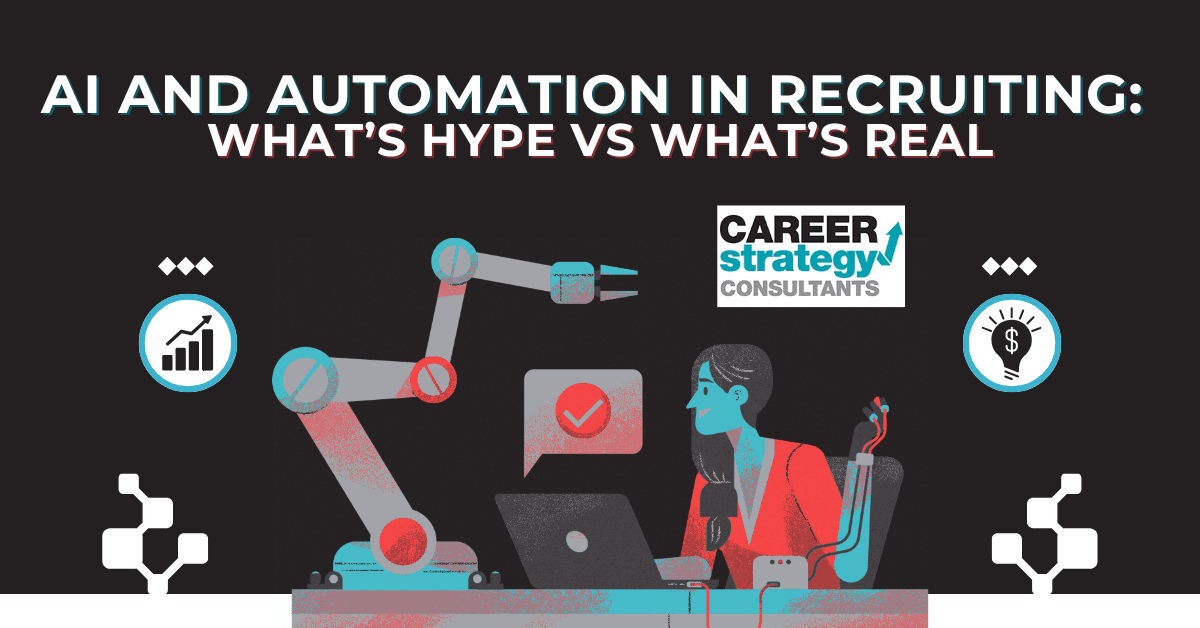
AI and Automation in Recruiting: What’s Hype vs What’s Real

AI and Automation in Recruiting: What’s Hype vs What’s Real

Artificial Intelligence (AI) has become the buzzword of every HR conference and recruiting tech webinar, but how much of it is actually transforming the hiring process? As AI continues to evolve, its impact on recruiting has grown beyond the experimental stage. However, separating what’s hype from what’s real is critical for companies looking to invest wisely.

At Career Strategy Consultants, we believe in the power of technology to make recruiting faster and smarter, but never at the expense of the human touch. Here’s what you need to know about how AI and automation are shaping recruiting in 2025 and where people still make the biggest difference.

The Promise of AI in Recruiting

AI promises to eliminate repetitive tasks, reduce bias, and accelerate decision-making. With the rise of large language models and machine learning tools, hiring teams can process more data and reach candidates faster than ever.

Potential Benefits:

  • Efficiency: Automated screening can review thousands of resumes in seconds.
  • Consistency: Algorithms apply the same criteria to every applicant.
  • Speed: Chatbots and scheduling tools cut down administrative time.
  • Scalability: Recruiters can manage larger candidate pipelines.

But despite all the buzz, not every “AI-powered” tool delivers measurable ROI.

What’s Real: Proven AI Use Cases in Recruiting

  1. AI-Powered Resume Screening

AI screening tools can analyze resumes for keywords, experience levels, and role-specific skills. When trained correctly, they identify qualified candidates faster and reduce recruiter workload.

CSC Perspective: While automation helps shortlist candidates efficiently, it still requires human oversight. Algorithms can overlook non-traditional experience or transferable skills that a seasoned recruiter would catch.

  1. Chatbots and Automated Candidate Engagement

Chatbots can answer FAQs, confirm interview times, and send updates, keeping candidates informed and engaged.

What Works: Simple, structured communication like interview reminders or initial application confirmations.

What Doesn’t: Complex questions about job details or compensation still need a personal touch. A chatbot can’t build relationships; recruiters can.

  1. Automated Interview Scheduling

Tools like Calendly or AI assistants streamline scheduling across multiple time zones and calendars, saving hours per week.

CSC Perspective: Automation shines here. It removes friction without impacting candidate experience.

  1. Predictive Analytics for Workforce Planning

Some platforms use AI to forecast future hiring needs or identify flight risks. These tools can help HR leaders make strategic workforce decisions when backed by reliable data.

What to Watch: Predictions are only as accurate as the data feeding them. Garbage in = garbage out.

What’s Hype: Overblown AI Claims

  1. AI That “Replaces Recruiters”

The myth of a fully autonomous recruiting process is just that, a myth. Recruiting is built on relationships, intuition, and culture fit, none of which can be automated.

  1. Bias-Free Hiring Algorithms

AI can reduce bias if properly trained, but it can also reinforce it. Models learn from historical data, which often reflects existing human bias. Responsible recruiting teams still need to validate outcomes and audit tools.

  1. Instant Candidate Quality Scoring

Many AI scoring tools claim to “rank” candidates instantly, but these scores can be misleading. Without context (such as cultural fit or potential), numerical rankings mean little.

The Human Factor: Why People Still Matter

Automation can handle the repetitive tasks, but empathy, intuition, and communication remain irreplaceable. Recruiters understand motivation, career transitions, and subtle cues that algorithms miss.

At CSC, we leverage technology to enhance, not replace, the recruiting process. Our team combines automation tools with human insight to ensure every placement fits both skill and culture.


CSC’s Approach to Smart Recruiting Technology

  • Use AI for efficiency, not decision-making.
  • Validate every automated result through recruiter review.
  • Prioritize candidate relationships over system shortcuts.

Conclusion

AI and automation have made recruiting faster and more data-driven, but technology can only take you so far. The companies that will win in 2026 are those that use AI responsibly while maintaining a human connection. At Career Strategy Consultants, we combine both worlds to help clients build teams that last.

Ready to modernize your recruiting strategy without losing the human touch? Contact Career Strategy Consultants to learn how we balance smart automation with personalized recruiting solutions that deliver real results.

Contact Us: Career Strategy Consultants | 740-325-1151 | info@careerstrategyinc.com

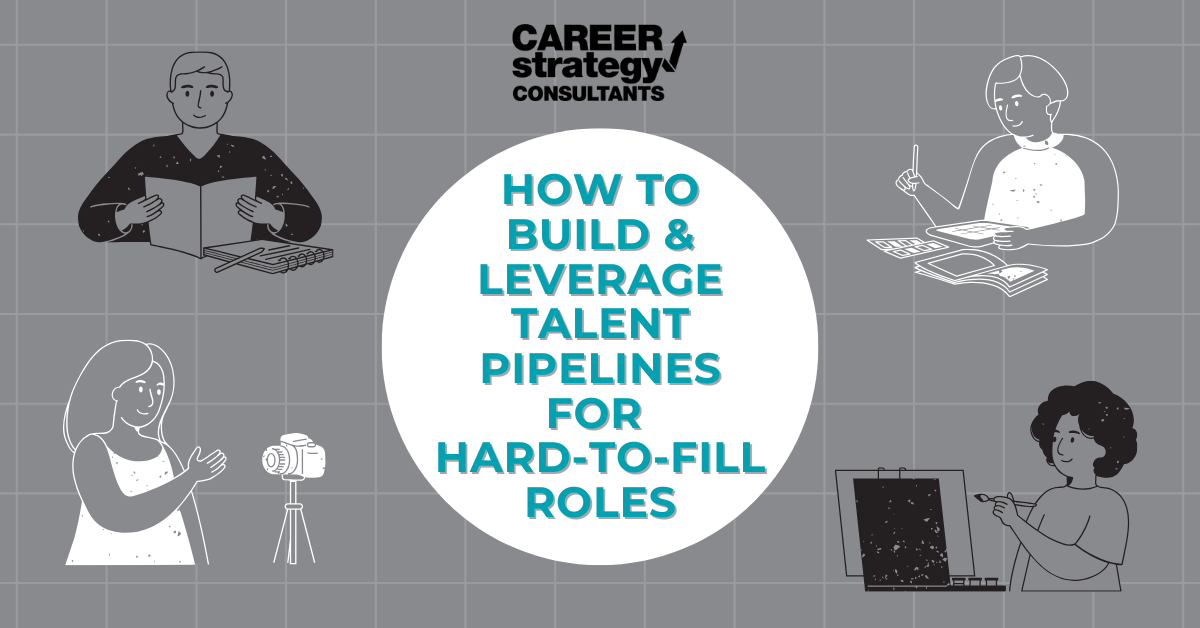
How to Build & Leverage Talent Pipelines for Hard-to-Fill Roles

How to Build & Leverage Talent Pipelines for Hard-to-Fill Roles

Hard-to-fill roles can slow down projects, delay growth, and frustrate leadership. Whether you’re hiring a niche engineer, a healthcare specialist, or a safety manager, the best way to avoid “panic hiring” is by building a talent pipeline. Companies that take a proactive approach, engaging candidates before roles even open, reduce time-to-fill, improve quality-of-hire, and stay competitive in tight labor markets.

This guide will break down actionable steps to build and leverage pipelines, complete with checklists and examples.

What is a Talent Pipeline?

A talent pipeline is a pool of pre-qualified, engaged candidates who may be a good fit for future roles. Instead of starting from scratch every time a role opens, recruiters tap into this pool to shorten hiring timelines and improve quality.

Benefits of Talent Pipelines

  • Faster time-to-fill: Candidates are already sourced and screened.
  • Reduced cost-per-hire: Less reliance on emergency ads or last-minute agency help.
  • Higher quality hires: Pipelines give you time to evaluate cultural fit and skill match.
  • Better candidate experience: Candidates feel valued when engaged before there’s a job opening.

How to Build a Talent Pipeline

  1. Identify Hard-to-Fill Roles
  • Look at historical hiring data; where have you struggled before?
  • Examples: Engineering directors, Controllers, skilled trades, senior HR leaders.
  1. Source Proactively
  • Use LinkedIn, niche job boards, and industry associations.
  • Attend conferences and networking events.
  • Leverage employee referrals.
  1. Nurture Passive Candidates
  • Send regular updates (company news, industry trends).
  • Share thought leadership and blog content (e.g., your posts on ghosting and bad hires).
  • Keep communication light but consistent.
  1. Segment Your Pipeline
  • By role type (engineering, HR, finance).
  • By seniority (entry-level, management, executive).
  • By geography (regional pipelines for remote or on-site roles).
  1. Use Technology Wisely
  • Applicant Tracking Systems (ATS) with tagging and search.
  • CRM-style recruiting tools for candidate engagement.
  • Automations for check-ins and reminders.

How to Leverage a Talent Pipeline

  1. Stay in Touch
  • Schedule quarterly check-ins.
  • Share relevant job opportunities as they open.
  1. Move Faster When Roles Open
  • Pre-screened candidates reduce time-to-fill by 40–60%.
  • Warm leads are more likely to accept offers.
  1. Reduce Candidate Ghosting
  • Candidates in pipelines feel valued and engaged, making them less likely to disappear.
  1. Improve Employer Brand
  • A structured pipeline shows candidates you’re serious about long-term relationships, not just transactional hiring.

Checklist: Building Your Pipeline

✅ Identify critical/hard-to-fill roles.
✅ Map sourcing channels.
✅ Develop and nurture content (blogs, newsletters, updates).
✅ Segment candidates by skill, location, and seniority.
✅ Implement ATS/CRM tracking.
✅ Schedule ongoing touchpoints.

Conclusion

Building a talent pipeline isn’t just a “nice-to-have”; it’s essential for companies facing competitive labor markets and specialized hiring needs. By sourcing proactively, nurturing relationships, and leveraging technology, businesses can turn hiring from a reactive scramble into a strategic advantage.

👉 Start today: Identify your top 3 hard-to-fill roles for 2026 and begin building your pipeline now. Career Strategy Consultants can help you get there faster.

Contact Us: Career Strategy Consultants | 740-325-1151 | info@careerstrategyinc.com

Recruiting Metrics That Actually Matter (and How to Use Them)

Recruiting Metrics That Actually Matter (and How to Use Them)

In today’s competitive hiring landscape, companies cannot afford to fly blind. Recruiting is not just about filling seats—it’s about making data-driven decisions that save time, reduce costs, and improve overall workforce quality. By focusing on the right recruiting metrics, organizations can gain visibility into what’s working, where bottlenecks exist, and how to optimize for the future. As we move into 2026 budget planning, the ability to demonstrate measurable ROI in recruiting will set apart the companies that thrive from those that struggle.

This guide will break down the recruiting KPIs that actually matter in 2025: time-to-fill, cost-per-hire, quality-of-hire, and funnel conversion. 


Why Recruiting Metrics Matter

  • Justify recruiting budgets: Senior leaders want numbers before approving next year’s spend. Metrics give you proof of ROI.
  • Identify bottlenecks: Is your process slowing down at sourcing, screening, or offer stages? Data reveals the weak links.
  • Improve candidate experience: Tracking conversion rates ensures candidates aren’t being lost due to long waits or poor communication.
  • Measure recruiter effectiveness: With clear KPIs, you can see who’s driving results and where training is needed.


Core Recruiting Metrics Every Business Should Track

  1. Time-to-Fill

Definition: The number of days between when a job requisition opens and when a candidate accepts the offer.

  • Why it matters: A long time-to-fill means lost productivity, higher overtime costs, and potential burnout for existing employees covering the gap.
  • Benchmarks by industry (2025):
    • Manufacturing: 36 days
    • Healthcare: 49 days
    • Engineering/Technical: 58 days
    • Corporate/Professional Services: 41 days

How to improve:

  • Streamline approvals.
  • Use proactive sourcing and pipelines.
  • Partner with staffing agencies for immediate candidate access.


  1. Cost-per-Hire

Definition: The total recruiting expenses divided by the number of hires.

Formula:

Cost-per-hire = (Internal recruiting costs + External recruiting costs) ÷ Total hires

  • Why it matters: Helps determine the efficiency of your recruiting function.
  • Typical costs include: advertising, job boards, recruiter salaries, assessments, background checks, and agency fees.
  • Benchmarks (SHRM 2025):
    • Average cost-per-hire across industries: $4,700
    • Executive roles: $14,900+

How to reduce:

  • Invest in employer branding to lower advertising costs.
  • Build pipelines to reduce emergency hires.
  • Utilize contract staffing strategically to prevent excessive overtime and project delays.


  1. Quality-of-Hire

Definition: A measure of the value new hires bring to the organization, often tracked over their first 12 months.

Common ways to measure:

  • Hiring manager satisfaction (post-hire surveys).
  • Performance ratings at 6 months and 12 months.
  • Retention rate of new hires (e.g., % still employed after 1 year).

Why it matters: Hiring the wrong person is more expensive than waiting longer. Quality-of-hire ensures you aren’t just filling seats—you’re building future leaders.

Benchmarks (Quality-of-Hire 2025):

  • Manufacturing: 1-year retention = 72%
  • Healthcare: 1-year retention = 68%
  • Engineering/Tech: 1-year retention = 74%
  • Corporate roles: 1-year retention = 79%


  1. Funnel Conversion Rates

Definition: The percentage of candidates who advance through each stage of your recruiting funnel.

Typical stages:

  • Applications received
  • Candidates screened
  • Interviews conducted
  • Offers extended
  • Offers accepted

Why it matters: Funnel analysis shows where candidates are dropping out. For example, if only 40% of offers are accepted, you may have a compensation or employer brand issue.

Benchmarks (Recruiting Funnel 2025):

  • Application to interview: 12%
  • Interview to offer: 17%
  • Offer to acceptance: 89%

How to improve conversions:

  • Communicate quickly.
  • Simplify the application process.
  • Make competitive offers.


Conclusion

Recruiting metrics aren’t just numbers; they’re strategic tools that can transform your hiring process. As 2026 approaches, HR leaders and executives will demand more data-driven decisions. By tracking time-to-fill, cost-per-hire, quality-of-hire, and funnel conversions, you’ll not only improve hiring outcomes but also secure the budget and resources needed to grow.

📩 Contact us today to see how we can save your team time, improve hiring outcomes, and deliver results that stick.

Contact Us: Career Strategy Consultants | 740-325-1151 | info@careerstrategyinc.com

Contingent vs. Retained Search: What’s Best for Your Next Hire?

Contingent vs. Retained Search: What’s Best for Your Next Hire?

When it’s time to bring in new talent, especially for high-impact or hard-to-fill roles, companies often turn to outside recruiting firms. But one of the first questions you’ll face is: Should we use a contingent or retained search model?

While both have their place, choosing the right approach can save you time, money, and missed opportunities.

At Career Strategy Consultants, we work with clients across manufacturing, engineering, HR, finance, and executive leadership to tailor the right search strategy for every role. This blog breaks down the difference between contingent and retained search, and how to decide what’s best for your next hire.

What Is a Contingent Search?

A contingent search means the recruiter only gets paid if you hire one of their candidates. It’s success-based and common for roles that:

  • Are mid-level or less specialized
  • Require a faster hiring process
  • Might have a large talent pool
  • Carry less financial or organizational risk

Pros:

  • No upfront cost
  • Multiple firms can compete for the same role
  • Good for urgent, high-volume, or lower-risk positions

Cons:

  • Recruiters may prioritize speed over fit
  • Less time spent on each search
  • Can result in higher candidate drop-off or less vetting

What Is a Retained Search?

A retained search is a partnership where you pay a portion of the fee upfront and receive dedicated resources to fill a specific role. It’s ideal for:

  • Executive or leadership positions
  • Hard-to-fill technical or niche roles
  • Confidential or strategic hires
  • Situations where time and quality are critical

Pros:

  • Exclusive recruiter focus
  • Deep vetting and candidate alignment
  • Priority access to passive talent
  • Higher level of communication and strategy

Cons:

  • Upfront investment required
  • Often used for one role at a time

So… Which Is Right for You?

✅ Use Contingent Search When:

  • You have a lower-complexity, mid-level opening
  • Time-to-fill is important but not urgent
  • You want to explore multiple recruiting options at once
  • You’re not 100% sure the role will be filled

✅ Use Retained Search When:

  • You’re hiring for a critical leadership role
  • You need confidentiality, strategy, or market insight
  • You’ve already tried hiring internally, with no luck
  • Speed, quality, and discretion are a priority

Why Career Strategy Consultants Offers Both

At Career Strategy Consultants, we believe in offering flexible solutions, because hiring isn’t one-size-fits-all.

Whether you need contingent search for speed and volume or retained search for strategic placements, we can customize a partnership that works for your timeline, budget, and hiring goals.

We bring:

  • A proprietary database of fully vetted candidates
  • A 90%+ success rate in placing passive candidates
  • Industry-specific expertise that saves hiring teams dozens of hours per search
  • A track record of 2,000+ placements nationwide

Final Thoughts: A Smarter Way to Hire Starts With the Right Model

Choosing between contingent and retained search isn’t just about cost, it’s about aligning your hiring strategy with your business goals.

The right partner will help you make that decision, not pressure you into one approach.

Let’s Talk About the Right Strategy for Your Next Hire

If you’re planning to hire and unsure which model fits best, we’re here to help. Career Strategy Consultants offers free consultations to assess your role, timeline, and talent market.

📩 Contact us today to see how we can save your team time, improve hiring outcomes, and deliver results that stick.

Contact Us: Career Strategy Consultants | 740-325-1151 | info@careerstrategyinc.com

5 Ways to Speed Up Your Hiring Process Without Sacrificing Quality

5 Ways to Speed Up Your Hiring Process Without Sacrificing Quality

In today’s fast-moving job market, time is everything. The longer your hiring process drags out, the greater your risk of losing top talent to faster-moving competitors.

But here’s the challenge: how do you hire quickly without cutting corners or making costly mistakes?

At Career Strategy Consultants, we work with employers every day to help them streamline hiring without sacrificing quality. Whether you’re filling roles in manufacturing, accounting & finance, HR, or engineering, these five proven strategies can speed up your hiring process without compromising the outcome.

  1. Write Job Descriptions That Attract (Not Confuse)

One of the biggest time wasters in hiring is sorting through unqualified applicants. That usually starts with a vague or outdated job posting.

✅ What to do: Use clear, concise language and focus on what the role really requires. Avoid laundry lists of every possible responsibility and instead highlight the top 3–5 skills needed to succeed.

A well-written posting brings in better matches, saving you time on the back end.

  1. Pre-Screen Candidates Efficiently

Spending hours on early-stage interviews that go nowhere? You’re not alone. Adding a simple, structured pre-screen step can help weed out poor fits early on.

✅ What to do: Use a quick phone screen, skills assessment, or knockout questions tailored to the role. A recruiter can handle this part for you, fast-tracking only the top talent to your desk.

  1. Limit Interview Rounds and Tighten Scheduling

Too many interviews, or long gaps between them, cause momentum to stall. Candidates lose interest, or worse, accept other offers.

✅ What to do: Limit interviews to 2–3 rounds max. Block time in advance with all decision-makers so you can move quickly once qualified candidates are identified.

  1. Give Fast, Clear Feedback

Silence after an interview is a fast track to losing your top pick. Candidates are often juggling multiple opportunities, and the first offer usually wins.

✅ What to do: Set internal expectations for providing interview feedback within 24–48 hours. Communicate clearly, even if it’s a “not yet.”

This builds trust, maintains engagement, and protects your employer brand.

  1. Partner With a Staffing Firm That Does the Heavy Lifting

Let’s face it, hiring takes time your team doesn’t always have. That’s where a recruiting partner like Career Strategy Consultants makes a real difference.

We source, screen, and present only the most qualified, ready-to-interview candidates. You skip the noise and fill the role faster.

✅ Bonus: We specialize in hard-to-fill roles across manufacturing, EHS, engineering, HR, and executive leadership. And we move fast without sacrificing quality.

Final Thought: Speed + Strategy = Better Hires

You don’t have to choose between speed and quality. With a few process improvements and the right partner, you can build a hiring process that’s both efficient and effective.

Ready to Hire Smarter and Faster?

If your hiring process feels stuck, let’s fix it. Career Strategy Consultants can help you reduce time-to-fill, improve candidate quality, and take the burden off your internal team.

📩 Contact us today to get started and start seeing results faster.

Contact Us: Career Strategy Consultants | 740-325-1151 | info@careerstrategyinc.com

How Long Should Hiring Take? Benchmarks by Industry

How Long Should Hiring Take? Benchmarks by Industry

Hiring the right person is important, but taking too long to do it could cost you the right candidate altogether.

While it’s important to be thorough, a drawn-out hiring process often leads to losing top talent, increased internal pressure on existing staff, and ultimately, missed revenue or productivity.

At Career Strategy Consultants, we help companies hire faster without sacrificing quality. In this blog, we’re breaking down realistic hiring timelines by industry, the risks of a slow hiring process, and how partnering with a recruiting firm can save your team time, energy, and money.

Industry Benchmarks: How Long Should It Take to Hire?

While timelines vary based on role and market conditions, here are common benchmarks across key industries:

Industry

Average Time to Hire

Manufacturing & Skilled Trades

21–28 days

Engineering & Technical Roles

30–45 days

EHS & Safety Positions

25–35 days

Human Resources & Corporate

30–40 days

Executive-Level or Niche Roles

45–60+ days

Note: These are averages, not targets. Companies that move faster typically secure stronger candidates with less competition.

Why Long Hiring Timelines Hurt Your Business

Even with good intentions, a slow process creates serious downsides:

  • Top candidates drop off (especially if they’re interviewing elsewhere)
  • Teams are overworked, leading to burnout and turnover
  • Projects stall, deadlines slip, and revenue is delayed
  • Hiring managers lose momentum or interest
  • The candidate experience suffers, damaging your employer brand

💡 A $70K vacancy left open for 6 weeks can cost you up to $15,000 in lost productivity and team stress.

Hiring Best Practices to Speed Up the Process

Here’s how to tighten your timeline without rushing the decision:

  1. Clarify the role before posting

Avoid mid-process rewrites or role confusion. Define must-haves vs. nice-to-haves before you go to market.

  1. Limit interview rounds

3 rounds (max) is a good rule of thumb for mid-level roles. Additional layers only slow momentum.

  1. Block time in advance

Pre-schedule interview slots with your team so you can move quickly when the right candidate comes along.

  1. Stay in communication

Keep candidates informed of timelines, next steps, and feedback. Silence often leads to drop-off.

How a Staffing Partner Speeds Up Hiring

When you partner with Career Strategy Consultants, we do the heavy lifting so your team doesn’t have to. We help you:

✅ Cut time-to-hire in half with pre-vetted, ready-to-interview candidates
✅ Maintain candidate engagement from first contact through offer
✅ Protect your team’s time by handling sourcing, screening, scheduling, and follow-up
✅ Get expert insight into market benchmarks, compensation, and candidate expectations

Don’t Let a Slow Process Cost You the Right Hire

The best candidates don’t wait around, and in today’s market, speed matters.

At Career Strategy Consultants, we specialize in helping companies across manufacturing, engineering, accounting & finance, HR, and executive-level hiring move quickly and confidently. We’re not just saving you time, we’re improving outcomes.

Need to Speed Up Your Hiring Process?

Let’s work together to reduce your time to hire and secure the talent your business needs, before your competitors do.

📩 Contact Career Strategy Consultants today to start hiring faster, smarter, and more effectively.

Contact Us: Career Strategy Consultants | 740-325-1151 | info@careerstrategyinc.com

Ghosting in Hiring: How to Reduce Candidate Drop-Off

Ghosting in Hiring: How to Reduce Candidate Drop-Off

You’ve invested time sourcing, screening, and interviewing a promising candidate, only for them to vanish without a trace. No call. No email. Just… silence.

Candidate ghosting is frustrating, time-consuming, and surprisingly common. In today’s competitive market, where top candidates are often juggling multiple offers, communication gaps or slow processes can cause them to drop off without warning.

At Career Strategy Consultants, we’ve helped hiring managers across manufacturing, finance & accounting, engineering, and corporate support reduce ghosting and fill roles faster by improving the candidate experience from day one. Here’s what we’ve seen work.

Why Candidates Ghost Employers

Before solving the problem, it helps to understand what’s driving it. Candidates typically ghost because:

  • They’ve accepted another offer
  • The process took too long
  • Communication was unclear or inconsistent
  • They didn’t feel engaged or valued
  • They had concerns about company culture or fit

The good news? These are all fixable with the right adjustments.

5 Proven Ways to Reduce Candidate Ghosting

  1. Tighten Up Your Hiring Timeline

The longer your process drags out, the more likely you are to lose good candidates. Top talent isn’t on the market for long, and if you wait, someone else won’t.

Tip: Set clear timelines with your team. Aim to complete interviews and make decisions within 7–10 business days from first contact.

  1. Communicate Early and Often

Silence breeds uncertainty. Candidates who don’t hear from you regularly will assume the worst and move on.

Tip: Send updates even when there’s no update. A quick check-in (“We’re still reviewing your feedback and expect to reach a decision by Friday”) goes a long way in maintaining engagement.

  1. Make the Process Human

Robotic emails, long waits, and generic interviews don’t inspire confidence. Candidates want to feel like more than a resume.

Tip: Personalize outreach, offer timely feedback, and have real conversations. Even automated emails can be humanized with the right tone.

  1. Set Clear Expectations Upfront

Ambiguity leads to frustration. If your hiring process includes three rounds of interviews and a skills test, say so from the start.

Tip: Outline the full process in the first conversation so candidates can commit and plan for what’s ahead.

  1. Partner With a Recruiting Firm That Keeps Candidates Engaged

One of the easiest ways to avoid ghosting is to delegate communication and vetting to a trusted staffing partner. At Career Strategy Consultants, we keep candidates warm and engaged at every stage so you don’t have to.

We ensure candidates are aligned, interested, and fully informed before they ever reach your desk. And if something changes, we’re the first to know, so you’re never left in the dark.

Stop Getting Ghosted. Start Hiring Smarter.

Candidate ghosting might feel inevitable, but it’s not. With better communication, faster processes, and the right support, you can drastically reduce drop-off and build a hiring experience that attracts and retains top talent.

Let’s Improve Your Hiring Process Today

If you’re tired of chasing candidates who disappear, let’s talk. Career Strategy Consultants can streamline your hiring process, keep candidates engaged, and deliver qualified talent without the ghosting.

📩 Reach out today to get started and stop losing time (and money) to dead-end interviews.

Contact Us: Career Strategy Consultants | 740-325-1151 | info@careerstrategyinc.com